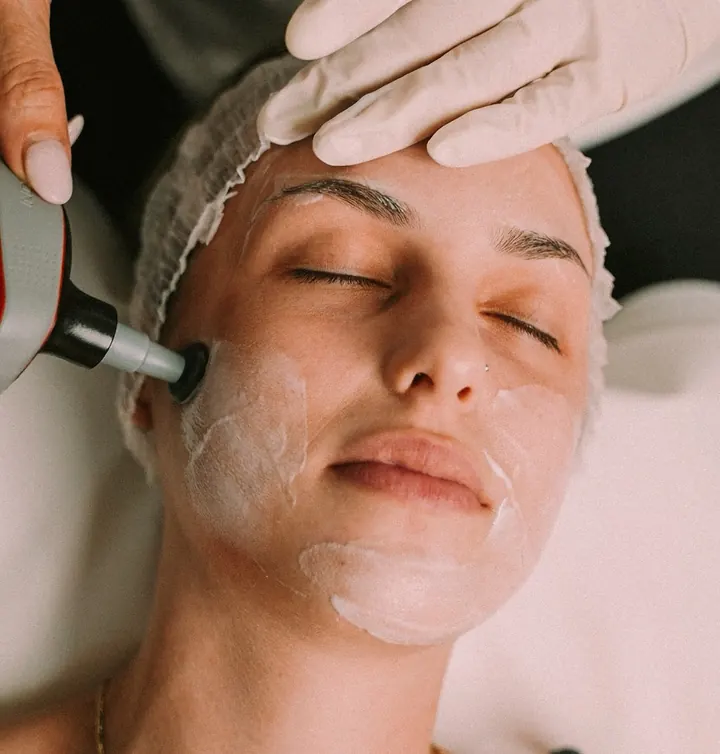
INDIBA is one of the safest treatments in aesthetic medicine. It works at a radiofrequency of 448 kHz, doesn't break the skin, uses no needles or surgery, and you go straight back to your day afterwards.
Still, “safe for most people” doesn't mean “safe for absolutely everyone”. There are conditions where we must not do the treatment and conditions where we decide only after talking with you.
In this article we go through all the contraindications, explain which reactions after treatment are normal and answer the questions clients ask us most often.
How does INDIBA work?
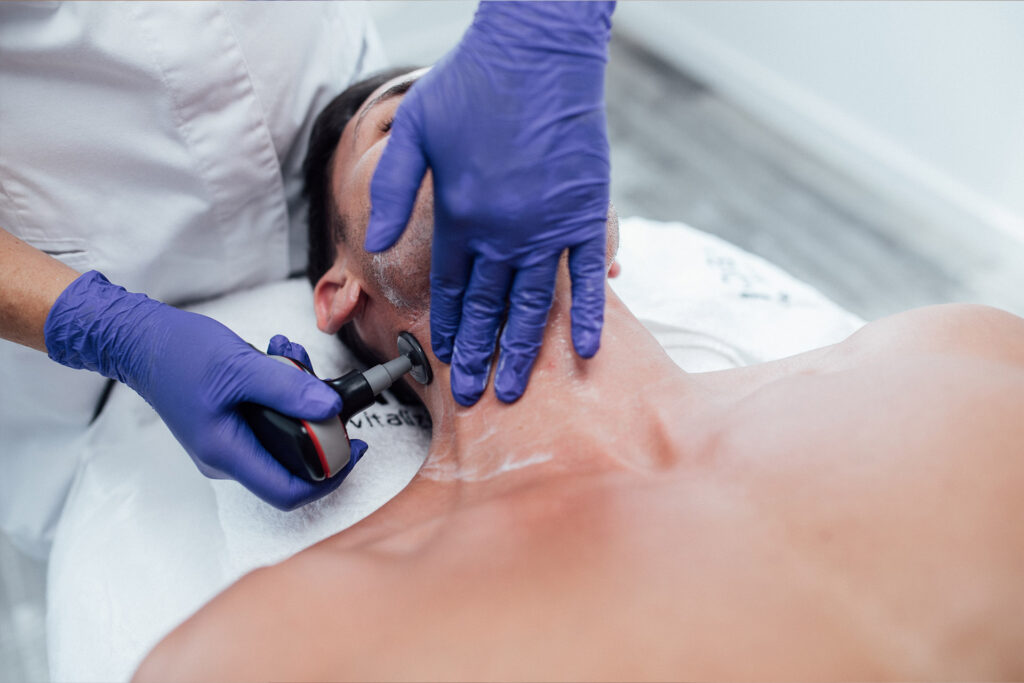
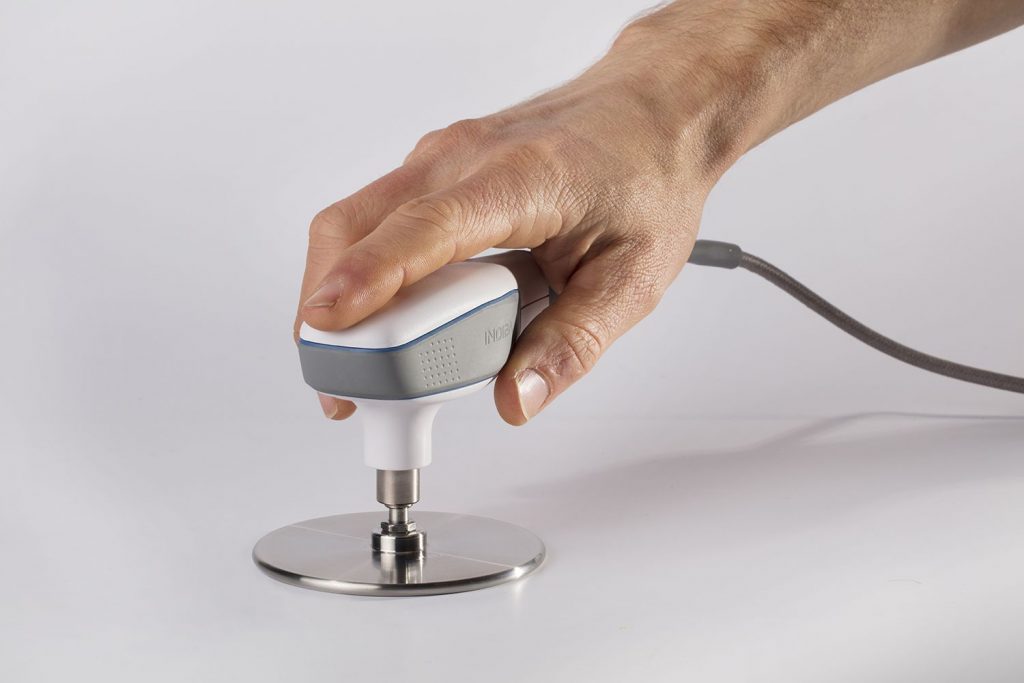
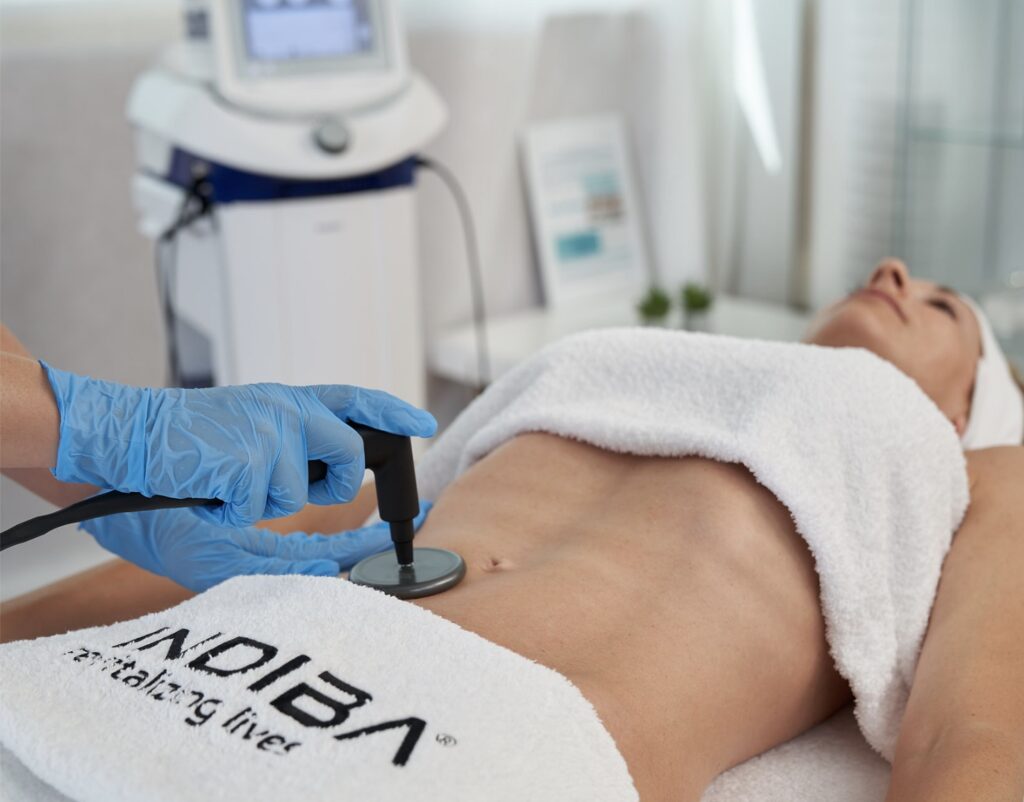
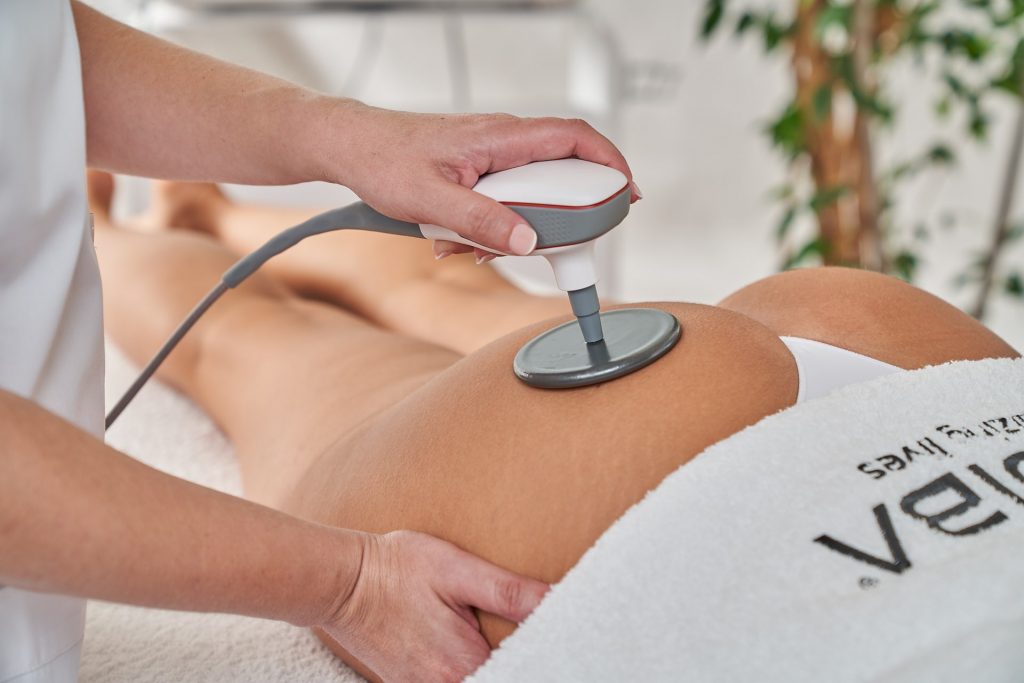
For contraindications to make sense, you need to understand how it works. INDIBA passes a very high-frequency current (448 kHz) through the skin, which creates gentle, controlled warmth in the tissue and stimulates natural cell renewal. We wrote about this in more detail in the article What are INDIBA treatments.
Precisely because the treatment uses current and heat, there are situations where we don't recommend it.
Absolute contraindications: when we don't do the treatment
An INDIBA treatment is not possible with the following conditions:
- Electronic implants. A pacemaker, defibrillator, insulin pump or any other implanted electronic device. Radiofrequency can interfere with how they work, and this is the strictest contraindication of all.
- Pregnancy. Treatments are not done at any point during pregnancy, whatever the area. After childbirth, on the other hand, INDIBA is an excellent choice for recovery, which we wrote about in a separate article.
- Active malignant disease. With a diagnosed tumour or ongoing treatment we don't do the treatment. After treatment has finished, your doctor's approval is needed.
- Thrombosis and thrombophlebitis. Warming tissue where there is a clot carries a risk, and there are no exceptions.
- Open wounds and active skin infections. The skin on the area to be treated must be intact and healthy.
- Fever and acute inflammation. We postpone the treatment until the condition settles.
Relative contraindications: when we decide case by case
With these conditions a treatment is often possible, but only after we go through your history and, if needed, ask your doctor's opinion:
- Reduced sensitivity to heat. For example with diabetic neuropathy. Your feedback on the warmth is part of how the treatment is controlled, so the therapist must know if your sensation is altered.
- Serious heart conditions. Stable, controlled conditions are usually not an obstacle, but we decide together with your cardiologist.
- Skin diseases in an acute phase. With rosacea, dermatitis or psoriasis on the treated area we wait for the skin to calm down and adjust the intensity.
- Recent aesthetic procedures. If you've recently had fillers or Botox, we'll wait for the product to settle in that area. We'll set the date together at the consultation.
What about metal implants?
This is one of the most common misconceptions. With conventional radiofrequency devices metal in the body can be a problem, so many people assume the same applies to INDIBA.
INDIBA at 448 kHz is different here: the manufacturer allows treatment over areas with metal implants, joint replacements or dental implants, with an adjusted technique. That's why INDIBA is also used in physiotherapy after hip or knee replacement. The only important thing is that the therapist knows about the implant before starting.
Side effects: what's normal after a treatment?
INDIBA has no recovery time in the usual sense. After a treatment you can drive, work and train. Any reactions are mild and short-lived:
- A feeling of warmth on the treated area, which fades within an hour
- Slight redness of the skin, a result of increased circulation, gone within an hour or two
- Thirst, so we recommend drinking more water on the day of treatment
That's all. If you ever notice anything beyond this, let your therapist know, but in practice even these mild reactions are often barely noticeable.
Does INDIBA cause cancer?
A question that is searched for often, so it deserves a clear answer: radiofrequency at 448 kHz is non-ionising radiation. It doesn't damage DNA and can't cause cell mutations, which makes it fundamentally different from, for example, X-rays. The technology has been used in medicine for decades.
We covered the whole topic of safety in detail in the article Myth or truth: are INDIBA treatments harmful to your health.
What does the check before the first treatment look like?
Before the first treatment at MBC sv. Marija we go through a short health questionnaire: chronic conditions, medication, implants, recent procedures. It takes a few minutes, and based on it the therapist confirms the treatment is safe for you or suggests an adjustment.
If you're not sure whether any of these contraindications apply to you, the simplest thing is to ask us. Consultations are free, and you can reach us by phone on +385 95 5476 704 or through the enquiry form on our website. We work in Zagreb, Split and Zadar.
Common questions
Does an INDIBA treatment hurt?
No. You feel a pleasant warmth, and most clients describe the treatment as relaxing.
How long does a treatment take?
Between 30 and 60 minutes, depending on the area being treated.
Can I have a treatment during my period?
Yes. Menstruation isn't a contraindication, although some clients prefer to skip belly treatments on those days for their own comfort.
Can I go in the sun after a treatment?
Yes, with the usual protection. INDIBA doesn't damage the surface layer of the skin, so there are no special restrictions on sun exposure.
How often are treatments done?
Usually once or twice a week at first, then further apart. We agree the exact rhythm at the consultation.